
By Sheeba Muskaan
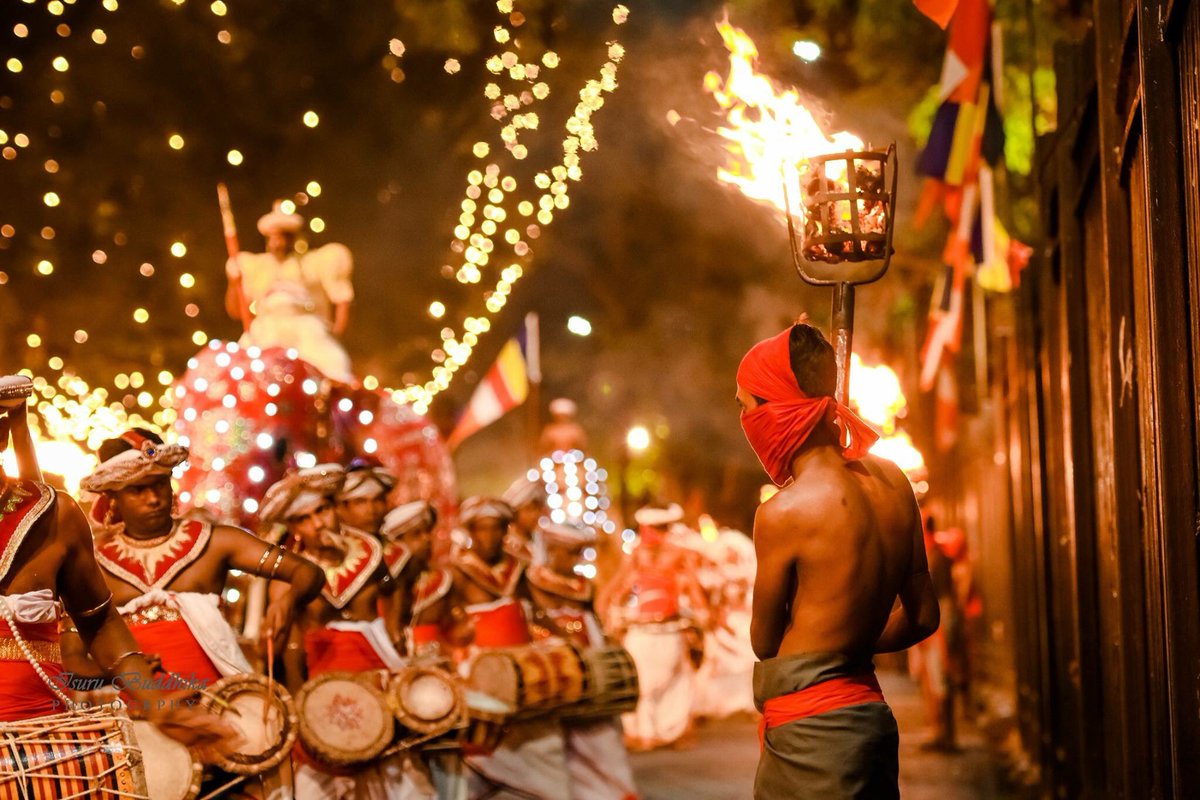
“Cultures are revived while they are practiced and descried”
An elegant yet vibrant festival of the tooth of Lord Buddha is celebrated at Sri Lanka with grandeur. People dress up with costumes and heavy ornaments during this flamboyant festival. This is a Buddhist festival that is made more appealing with miscellany of adorning cultural dances. The Elephant plays a significant role during this festival; one must see the lavishly decorated Elephants that enhance the high-spiritedness of this splendid festival. This festival dates back to the 3rd century BC and it is said that the purpose of Perahera is to ask the Gods for rainfall.
This festival was celebrated after the Tooth Relic was brought to Sri lanka from India. The modern day Perahera performs a custom where a young sanctified jackfruit tree is cut and planted in the premises of four different Devales. Tourists find this extremely fascinating and effervescent. Further, for the next four to five days there is music and drumming that creates the vibe of a fete. From flags to canopy bearers, that burst into colours and brings back a surge of traditions.
While the Tooth Relic is taken on procession, people gather and wait to experience this part of the festival as it is very exciting and mind-blowing. The Tooth Relic is led by whip-crackers and fireball acrobats to clear the path followed by the Buddhist flag bearers. Further, it is led by the first Elephant and then the drummers and dancers who attract a lot of crowd and merriment. Other flag bearers, musicians, dancers and massive Elephants follow this crowd and in this lay the beauty of Perahera Festival.
The festival goes ahead with multiple traditional activities and another procession with rituals that are performed throughout the festival. But during the fifth procession women are allowed to dance and it is a pleasing sight! The Festival includes a proper five day festival ending with Randoli Perahera where Randoli refers to the palanquins that were used by Queens and Kings traditionally to travel and the festival ends with Diya Kepeema that is also called the water cutting ceremony at Mahaweli River. The Day Perahera (procession) marks the ceremony of that year. This festival truly defines culture and the magnitude of rituals that take place to maintain the rains for serenity in their endearing place.
 Explorer Travel India